

Summing Up The Week
What began as a cautious pullback turned into a full‑blown risk‑off week as markets absorbed a barrage of destabilizing headlines.
The U.S.–Israel strike on Iran and Iran’s swift missile and drone retaliation shook confidence that the conflict would remain contained. The mood soured further when Treasury Secretary Scott Bessent confirmed the administration’s sweeping 15% global tariff would take effect within days, raising the specter of renewed trade friction.
Then, came Friday’s shocker: a 92,000 drop in U.S. payrolls, a stark reversal from expectations for 50,000 new jobs and a reminder that the labor market may be losing altitude at the worst possible moment.
Let's take a deeper dive into the news that moved the markets this week...
Market News
U.S.-Israel strikes Iran, 4 U.S. military bases hit in retaliation
On Saturday, President Donald Trump confirmed the U.S. had started military operations against Iran with a massive attack resulting in retaliation on four U.S. military bases, reported CNBC.
Trump had telegraphed the attacks for weeks, warning that "really bad things" would happen if Tehran continued the development of its nuclear program. "Our objective is to defend the American people by eliminating imminent threats from the Iranian regime, a vicious group of very hard, terrible people," Trump said in a video message on his Truth Social account.
Iran retaliated by attacking American bases, including one in Qatar, using ballistic missiles. Qatar and the United Arab Emirates condemned the Iranian counterattacks," The State of Qatar expresses its strong condemnation of the targeting of Qatari territory with Iranian ballistic missiles, considering it a flagrant violation of its national sovereignty," Qatar’s Ministry of Defense said in a statement.
Trump's reasoning for the attacks was to permanently halt the Iranian's development of nuclear weapons, "[In] operation midnight hammer last June, we obliterated the regime’s nuclear program at Fordow nets. And Isfahan. After that attack, we warned them never to resume their malicious pursuit of nuclear weapons, and we sought repeatedly to make a deal, but Iran refused," Trump said. "Instead, they attempted to rebuild their nuclear program and to continue developing the long range missiles that can now threaten our very good friends and allies in Europe, our troops stationed overseas and could soon reach the American homeland."
Israeli Prime Minister Benjamin Netanyahu thanked Trump for "his historic leadership" and added that Iran's government had "spilled out blood, murdered many Americans, and massacred its own people."
Netanyahu continued in a statement, "This murderous terrorist regime must not be allowed to arm itself with nuclear weapons that would enable it to threaten all of humanity."
On Monday, the markets opened down and recovered throughout the day as investors believed the war might be short-lived, however when Iran began launching drone strikes on U.S. facilities as well as nearby countries, the outlook soured as experts reported the war could potentially stretching much longer than expected.
As a result, the markets opened down significantly on Tuesday with both the S&P 500 and Nasdaq down more than -2% at the open.
Global 15% tariff to start this week says Bessent
On Wednesday, U.S. Treasury Secretary Scott Bessent said the 15% global tariff President Trump announced a little more than a week ago would go into effect this week and that the rates will return in five months to the levels they were before the Supreme Court ruling, reported CNBC.
Bessent suggested that the Trump Administration would use different legislation to empower the President's ability to implement tariffs. "It’s my strong belief that the tariff rates will be back to their old rate within five months," he said in an interview with CNBC. "They have survived more than 4,000 legal challenges. They are more slow moving, but they are more robust."
Private companies added 63K jobs in February, just 11K in January
On Wednesday, ADP, the private payroll processor, released its labor report which showed private companies added 63,000 jobs in February beating the consensus estimate for 48,000, however ADP revised the January estimate down to 11,000, reported CNBC.
While the job growth is promising, the sectors seeing the most growth are not - education and health services. The vast majority of other sectors are either seeing stagnant growth, at best, or decreasing numbers, at worst. For example, professional and business services saw a decline of 30,000 jobs with manufacturing losing 5,000 over the same time period.
"We’ve seen an increase in hiring and pay gains remain solid, especially for job-stayers," said ADP’s Chief Economist, Nela Richardson. "But with hiring concentrated in only a few sectors, our data shows no widespread pay benefit from changing jobs."
U.S. payrolls fall 92K in February, consensus expected an add of 50K
On Friday, the U.S. payroll report surprised the markets when jobs fell by 92,000 in February, a dramatic difference from the consensus estimate of 50,000 added in February, reported CNBC. To make matters worse, the unemployment rate increased slightly to 4.4% as positions were reduced across several sectors.
Pundits fear that this surprise drop indicates further weakness coming in the labor market. "I think it just tells us that the hopes that the labor market was steadying, maybe that was too much," said Mary Daly, President of the Federal Reserve Bank of San Francisco. "We also have inflation printing above target and oil prices rising. How long they last, we don’t know, but both of our goals are in our risks now."
This data combined with the ongoing war in Iraq to cause stocks to sell of precipitously at the open with both the S&P 500 and Nasdaq down far more than -1%, respectively.
Next Week's Gameplan
In addition to all the wild geopolitical news that will continue to fly, next week brings up several key datapoints, too. On Tuesday, we get existing home sales for February followed by the Consumer Price Index (CPI) on Wednesday.
As per usual, Friday's the big day with the first revision of Q4-2025 GDP gets released along with the Personal Consumption Expenditures (PCE) index, the Federal Reserve's preferred gauge of inflation.
As if that wasn't enough, I still have a few late stragglers reporting earnings (yes, we're not done, yet). Next week sees only one, though, as bedraggled AI stock UiPath (PATH) reports earnings after the market closes on Wednesday.
Pile in all the unknown unknowns we might get, too, and next week promises to be another volatile one, so join me here next Friday to go over all the news that moved the markets, friends!
Check out Get Irked Premium on Substack!
After providing FREE content since 2018, the time constraints of producing Investments in Play, Speculation in Play, the Pandemic Portfolio, and Stock Shopping List have become too much to continue doing for free.
On Substack, you can subscribe for FREE to have the Week in Review and Crypto Corner, now separate newsletters, sent to your email inbox at no cost. The portfolio updates and Stock Shopping List are now part of a premium subscription plan.
I hope you will join me on Substack as I continue on this exciting journey!
THANK YOU FOR YOUR ONGOING SUPPORT!
Crytpo Corner
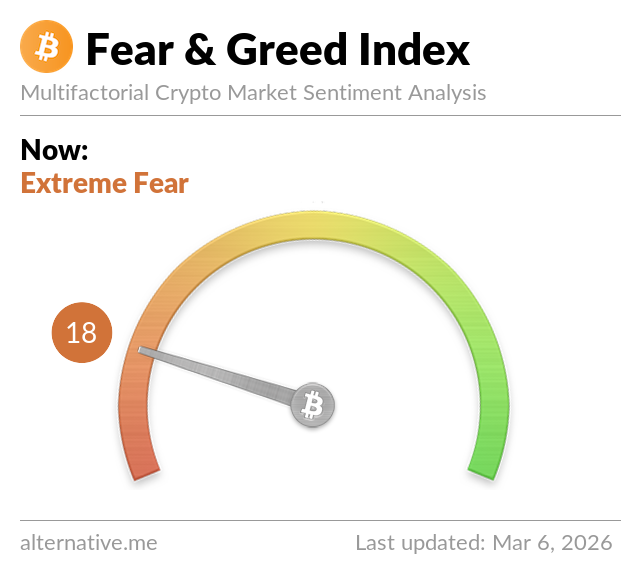
Click chart for enlarged version
Bitcoin Price (in USD)
%
Weekly Change
Bitcoin Price Action
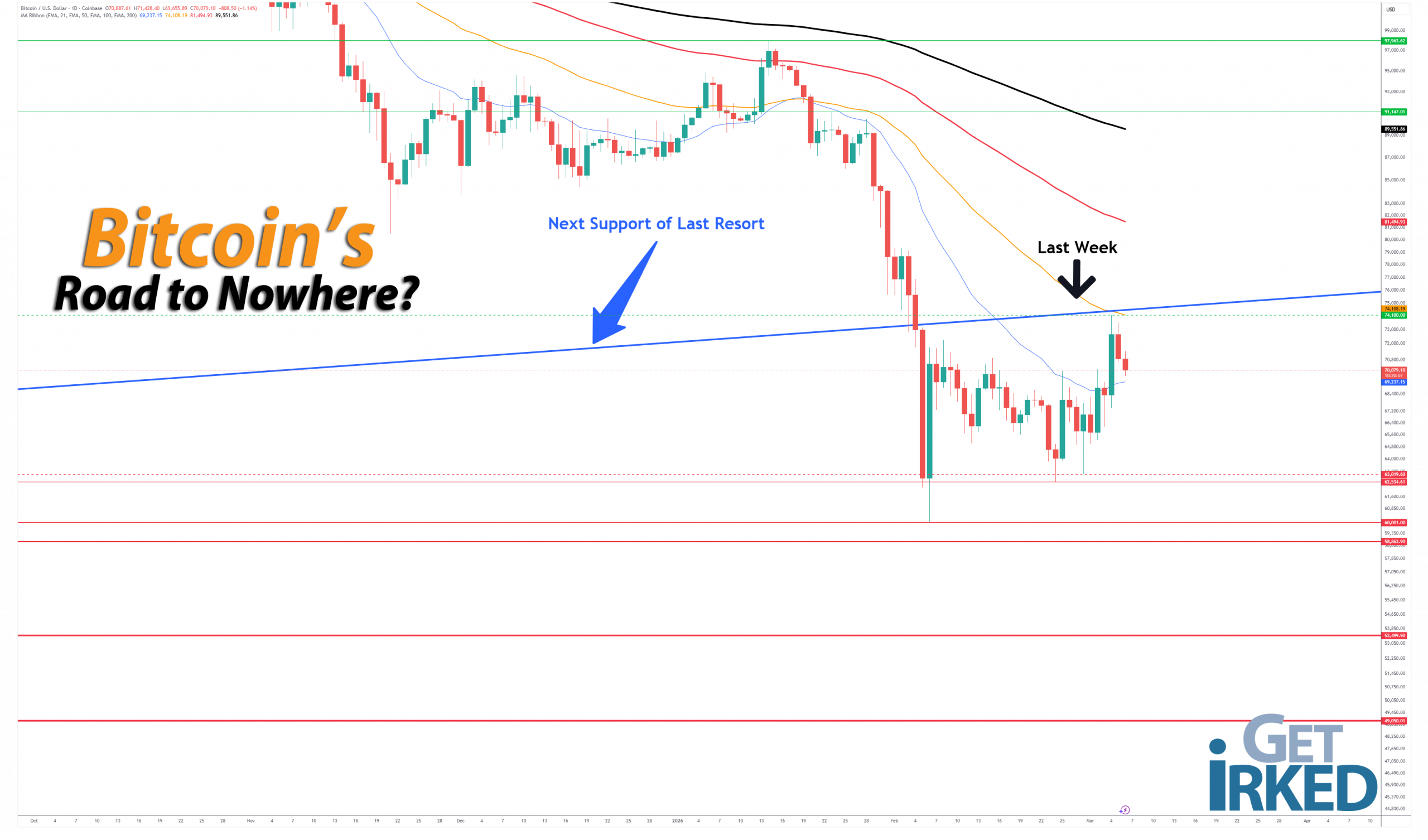
Bitcoin did something strange at the start of the U.S.-Israel attack on Iran last weekend, or, more accurately, didn’t do something: sell off. Shortly after news of the U.S. and Israel’s initial strikes on Iran, Bitcoin dipped and found support at a slightly-higher weekly-low of $63,019.60 on Saturday. Then on Monday, Bitcoin broke through the resistance at $70,000.00 and continued to rally before making a higher weekly-high at $474,100 on Wednesday.
No matter what permabulls and Bitcoin-diehards want to say, Bitcoin is not a safe haven; it trades in direct correlation with risk-on assets like technology and growth stocks, and when Bitcoin does decouple - as it has over the past few months - it typically sells off even when tech and growth stocks rally. So, when Bitcoin recovered rapidly after seeing a quick dip on the news of the initial strikes, I took notice. Now, this in no way means the Crypto Winter is officially over nor does it mean there’s no further potential downside ahead, it is promising.
Then, later in the week, President Donald Trump announced his push to get Congress to pass pro-cryptocurrency legislation. This legislation is aimed to allow the Treasury to create a USD Stablecoin which will enable the government to create U.S. dollars and distribute them internationally without the need to involve foreign governments, empowering the Treasury to pay down the debt. As a result, these laws are not directly pro-Bitcoin or any other crypto, however positive news for the sector is positive and Bitcoin rallied.
All this being said, it’s critical to note that Bitcoin has many key moving averages to contend with, all of which will present its own challenge. Currently, Bitcoin’s attempting to battle the 50-Day Exponential Moving Average (EMA, in orange). You’ll also notice that the blue Next Support of Last Resort trendline which I’ve been using since January 2019 is also presenting resistance now that it is no longer support, floating right around the 50-Day EMA.
If it’s able to turn the MA into support, the next battle will be the 100-Day EMA currently around $81,000. After that, it’s the 200-Day EMA just under $90,000. Typically, the longer the moving average, the more Bullish thrust required to overcome it, so this is all a long-winded way of saying Bitcoin has a very long road ahead of it.
However, constructive news is positive, even if only for a short while.
The Bullish Case
Bulls are screaming from the rooftops (well, okay, X) that Bitcoin’s Crypto Winter is over and it’s nothing but blue skies and new all-time highs from here. The Bulls have struggled for weeks, so the permabulls, in particular, latch on to anyone positive price action as the end of pain. Calls for $315,000 Bitcoin and higher were thrown by some of the loudest permabulls in the space on X over the past week, and all Bearish arguments are continuing to be attacked with vigor.
The Bearish Case
Bears are notably calm, pointing out that Bitcoin remains under the short-term holders’ average price, a key Bearish sign. With many short-term traders underwater, they will present significant selling pressure when Bitcoin makes them whole, preferring to close out their positions at break-even rather than risk having the crypto roll over.
Additionally, the Bear arguments I’ve presented for the past few months still remain intact:
-
There are no significant positive catalysts for Bitcoin on the horizon. Even the pro-crypto legislation discussed above is only good for stablecoins, not Bitcoin.
-
The technical damage done to the charts since October has been devastating. Also discussed above, the Bulls have significant work ahead of them to right-side the downtrend and regain the momentum.
-
Critically, this Crypto Winter would be the shallowest in Bitcoin’s entire history at only a -52.5% drawdown from the all-time high (ATH). That, on its own, wouldn’t be unusual since every subsequent Crypto Winter has been shallower than the one that preceded it.
However, that would make this Crypto Winter 47.79% shallower than the most recent one in 2022 which sold off -77.59% from its ATH. 2022’s Crypto Winter was only 7.93% shallower than 2018’s -84.27%, and 2018’s was only 3.19% shallower than 2013-2015’s -86.96%. In other words, not only would 2026’s Crypto Winter be the shallowest ever, it would also represent the crypto finding support significantly higher than ever before as well.
While such an outcome isn’t impossible, it would be extraordinarily unlikely.
Bears also rightfully point out that Bitcoin regularly rallies 40%+ off its lows during a Crypto Winter only to roll over and break down to even lower lows. This is perfectly normal price action when Bitcoin’s in a significant Bearish downtrend and, until it proves itself, indicates that the Crypto Winter could be far from over.
Bitcoin Trade Update
Premium subscribers to Get Irked get access to all the moves I've made in my Bitcoin trade over the past week as well as my next thirty (30) ... yes, 30 ... buys in Bitcoin including price levels, quantities, and a full layout of my ongoing long-term trade in the world's biggest crypto.
Not Your Keys, Not Your Crypto...
In light of brokerage failures in 2022, I no longer keep any of my crypto on an exchange and I only keep enough USD on the exchanges I use to execute my next few buys. I use multiple cold wallets from the brands Ledger and Trezor to hold my crypto (click the links to access the direct sites, and I receive no affiliate benefits from these links).
Additionally, I have now divided my allocated USD between two different exchanges - Gemini and Coinbase - in case one (or both) becomes insolvent. Disclaimer: We both receive a bonus if you use my Gemini referral link to open an account.
I do not trust anyone in the space, even with Coinbase (COIN) being publicly traded (and one of my own Investments in Play positions).
No price target is unrealistic in the cryptocurrency space – Bullish or Bearish.
While traditional stock market investors and traders may think the price targets in the cryptocurrency space are outlandish due to the incredible spread (possible moves include drops of -90% or more and gains of +1000% or more), Bitcoin has demonstrated that, more than any speculative asset, its price is capable of doing anything.
Here are some of Bitcoin's price movements over the past couple of years:
- In 2017, Bitcoin rose +2,707% from its January low of $734.64 to make an all-time high of $19,891.99 in December.
- Then, Bitcoin crashed nearly -85% from its high to a December 2018 low of $3128.89.
- In the first half of 2019, Bitcoin rallied +343% to $13,868.44.
- In December, Bitcoin crashed -54% to a low of $6430.00 in December 2019.
- In February 2020, Bitcoin rallied +64% to $10,522.51.
- In March , Bitcoin crashed nearly -63% to a low of $3858.00, mostly in 24 hours.
- Then, Bitcoin rallied +988% to a new all-time high of $41,986.37 in January 2021.
- Later in January 2021, Bitcoin dropped -32% to a low of $28,732.00.
- In February, Bitcoin rallied +103% to a new all-time high of $58,367.00.
- Later in February, Bitcoin dropped -26% to a low of $43,016.00.
- In April , Bitcoin rallied +51% to a new all-time high of $64,896.75.
- In June , Bitcoin crashed -56% to a low of $28,800.00.
- In November, Bitcoin rallied +140% to a new all-time high of $69,000.00.
- In November 2022, Bitcoin crashed -78% to a low of $15,460.00.
- In April 2023, Bitcoin rallied +101% to a high of $31,050.00.
- In June, Bitcoin dropped -20% to a low of $24,750.00
- In July, Bitcoin rallied +29% to a high of $31,862.21.
- In September, Bitcoin dropped -22% to a low of $24,900.00.
- In January 2024, Bitcoin rallied +97% to a high of $49,102.29.
- Later in January, Bitcoin dropped -22% to a low of $38,501.00.
- In March, Bitcoin rallied +92% to a new all-time high of $73,835.57.
- In August, Bitcoin dropped -33% to a low of $49,050.01.
- In January 2025, Bitcoin rallied +150% to a new all-time high of $109,358.01.
- In April, Bitcoin dropped -32% to a low of $74,420.69.
- In May, Bitcoin rallied +51% to a new all-time high of $112,000.00.
- In June, Bitcoin dropped -12% to a low of $98,247.01.
- In July, Bitcoin rallied +25% to a new all-time high of $123,231.07.
- In September, Bitcoin dropped -14% to a low of $107,250.00.
- In October, Bitcoin rallied +18% to a new all-time high of $126,296.00.
- In February 2026, Bitcoin dropped -53% to a low of $60,001.00.
Where will Bitcoin go from here? Truly, anything is possible…
What if Bitcoin’s headed to zero?
The only reason I speculate in the cryptocurrency space is I truly believe Bitcoin isn’t headed to zero.
I am prepared for that possibility, however, by knowing I could potentially lose all of the capital I’ve allocated to this speculative investment. Professional advisers recommend speculating with no more than 5% of an investor’s overall assets. Personally, I’ve allocated less than that to speculating in crypto.
I feel that anyone who doesn’t fully believe in the long-term viability of cryptocurrency would be better served not speculating in the space.
On a good day, this asset class isn’t suitable for those with weak stomachs. On volatile days, the sector can induce nausea in the most iron-willed speculator. If a speculator isn’t confident in the space, the moves will cause mistakes to be made.
DISCLAIMER: Anyone considering speculating in the crypto sector should only do so with funds they are prepared to lose completely. All interested individuals should consult a professional financial adviser to see if speculation is right for them. No Get Irked contributor is a financial professional of any kind.
Suicide Hotline - You Are Not Alone
Studies show that economic recessions cause an increase in suicide, especially when combined with thoughts of loneliness and anxiety.
If you or someone you know are having thoughts of suicide or self-harm, please contact the National Suicide Prevention Lifeline by visiting www.suicidepreventionlifeline.org or calling 1-800-273-TALK.
The hotline is open 24 hours a day, 7 days a week.

You must be logged in to post a comment.