
Summing Up The Week
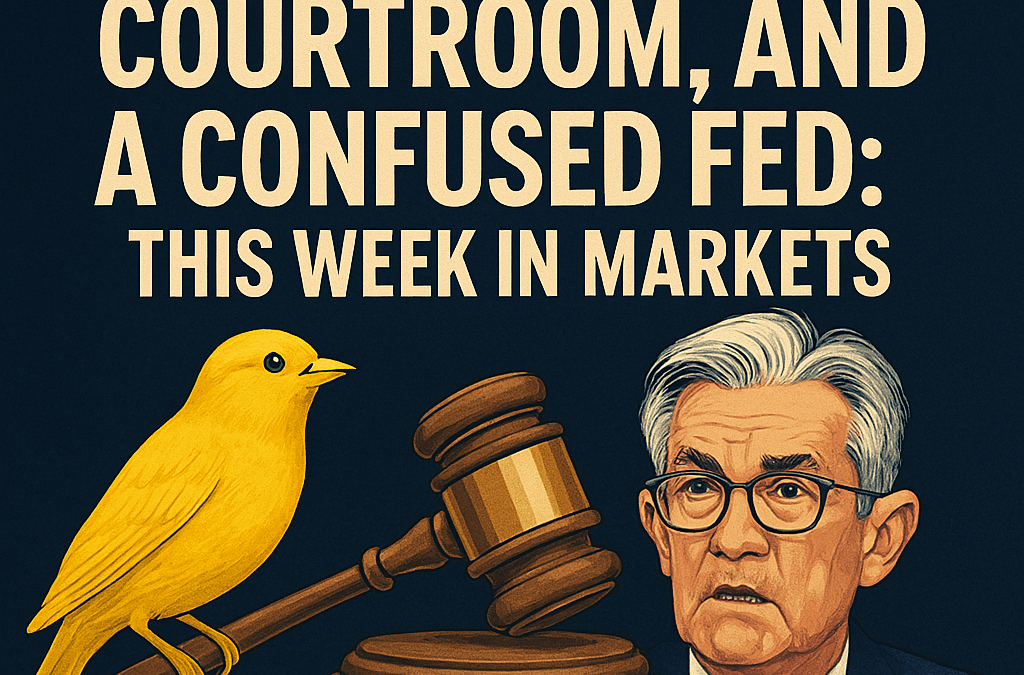
The stock market spent the week ricocheting between Fed angst, bubble whispers, shutdown fallout, and a surprise tariff smackdown. Yet, somehow, stocks still managed to keep their composure.
With policymakers split on rates, private credit flashing warning lights, GDP face‑planting, inflation behaving just enough, and the Supreme Court yanking the rug out from under a chunk of Trump’s tariffs, investors were left trying to decide whether this was a normal bout of volatility or the opening act of something far more dramatic.
In other words: just another quiet week on Wall Street.
Let’s take a deeper dive into the news that moved markets this week…
Market News
Fed divided about interest rate changes
On Wednesday, the January Federal Reserve meeting minutes were released which showed what most of us have been hearing from their interviews – the Fed is divided about where to go when it comes to changing the benchmark interest rate, reported CNBC.
Comments in the meeting summary initially showed a dovish view toward rates, “In considering the outlook for monetary policy, several participants commented that further downward adjustments to the target range for the federal funds rate would likely be appropriate if inflation were to decline in line with their expectations.”
The dovish outlook soured when discussing which of the Fed’s dual mandate the committee should focus on: labor or inflation, “Some participants commented that it would likely be appropriate to hold the policy rate steady for some time as the Committee carefully assesses incoming data, and a number of these participants judged that additional policy easing may not be warranted until there was clear indication that the progress of disinflation was firmly back on track.”
As a result, the meeting minutes added a bit of volatility into a market that’s already been unusually volatile, however the S&P 500 finished the day up +0.56% and the Nasdaq up +0.78%.
Private credit bubble fears when Blue Owl raises liquidity issue
On Thursday, CNBC reported that Blue Owl Capital (OWL) permanently restricted withdrawals from one of its retail-focused debt funds. While the company disputed these claims on Friday, concerns over liquidity in the booming (some say “bubbling”) private market have increased ever since the collapse of a couple of debt-laden companies in late 2025.
Many analysts have raised alarm over what could potentially be a contagion-crisis spreading across markets, “This is a canary in the coal mine; the private markets bubble is finally starting to burst,” said Dan Rasmussen, Founder and Adviser at Verdad Capital, in an interview with CNBC.
He continued, “Years of ultra-low rates and ultra-low spreads and very few bankruptcies led investors to go further and further out the risk spectrum in credit [and] is a classic case of ‘fool’s yield,’ high yield that doesn’t translate into high returns because the borrowers were too risky.”
Q4 GDP dramatically misses estimate, up just 1.4% vs 2.5%
On Friday, the Commerce Department reported the United States GDP for the fourth quarter of 2025 rose 1.4%, substantially lower than estimates for a 2.5% gain, reported CNBC. The data showed consumer spending increased at a slower pace combined with government spending virtually disappearing during the prolonged record shutdown.
Analysts point to the government shutdown as the real culprit for the bad GDP print, “The Federal government shutdown clearly sent the economy careening off its strong growth path in the fourth quarter which is a one-off that won’t be repeated in early 2026,” said Chris Rupkey, Chief Economist at Fwdbonds.
Inflation rose 3% in December, matching consensus
On Friday, the delayed Personal Consumption Expenditures (PCE) index showed inflation rose 3% in December, in-line with expectations, reported CNBC. While still higher than the Federal Reserve’s 2% target, the PCE meeting expectations was seen by some as a sign the Fed has the green light to continue cutting rates.
Analysts pointed out that while the economy may bounce back from 2025’s record-length government shutdown, they do have the power to weaken the U.S. economy, “The government shutdown hurt growth at the end of 2025, [and while] the economy will likely bounce back in early 2026, […] it isn’t harmless to do prolonged shutdowns,” said Heather Long, Chief Economist at Navy Federal Credit Union. “Overall, the U.S. economy was resilient in 2025 despite many headwinds. Solid consumption and the AI boom kept the economy growing.”
Supreme Court strikes down Trump tariffs as illegal
On Friday, the Supreme Court struck down a significant number of President Donald Trump’s tariffs, arguing the laws surrounding import duties “do not authorize the President to impose tariffs,” reported CNBC.
The Trump Administration had been using the International Emergency Economic Powers Act (IEEPA) as the justification for imposing tariffs, however the Supreme Court argued this was an improper reading of the law. IEEPA does not explicitly mention tariffs. Instead, it allows the president to “regulate … importation” of foreign property transactions after declaring a national emergency in order to deal with certain “unusual and extraordinary” threats.
Initially, the markets rallied on the back of the news on hopes that the elimination of the tariffs would remove significant headwinds facing U.S. companies, but became volatile as the Trump Administration announced they would be taking the alternate routes they discussed previously in order to re-enact the tariffs.
Next Week’s Gameplan
You’d think we’d almost be through earnings season, and while you’d be right in terms of the percentage of companies who have already reported, the Big Daddy comes next week: Nvidia (NVDA). Many analysts believe Nvidia’s earnings will determine the market’s next swing, so all eyes are on Wednesday.
Nvidia’s not the only one of my holdings reporting next week, either:
- Wednesday: Dakota Gold (DC), Joby Aviation (JOBY), Nvidia (NVDA), Salesforce (CRM), and Snowflake (SNOW) all report After Market Close (AMC).
- Thursday: Block/Square (XYZ) reports AMC.
- Friday/Weekend: Berkshire-Hathaway (BRK.A, BRK.B) reports.
Additionally, we’ll also be getting some economic datapoints which could shed some light on the state of the U.S. economy. On Tuesday, we get the Consumer Confidence survey results for February and on Friday we get the delayed Producer Price Index (PPI) for January as well as the Chicago Business Barometer (PMI).
And all that is without any unknowns unknowns showing up over the course of the week, so there will definitely be plenty to talk about when you meet me back here on Friday, friends!
Check out Get Irked Premium on Substack!
After providing FREE content since 2018, the time constraints of producing Investments in Play, Speculation in Play, the Pandemic Portfolio, and Stock Shopping List have become too much to continue doing for free.
On Substack, you can subscribe for FREE to have the Week in Review and Crypto Corner, now separate newsletters, sent to your email inbox at no cost. The portfolio updates and Stock Shopping List are now part of a premium subscription plan.
I hope you will join me on Substack as I continue on this exciting journey!
THANK YOU FOR YOUR ONGOING SUPPORT!
Crytpo Corner

Bitcoin Price (in USD)
%
Weekly Change
Bitcoin Price Action
Despite a significant amount of “heated” debate on social media, Bitcoin remained trading in a Bearish range over the past week. The crypto was only able to manage a much lower weekly-high at $70,941.65 on Sunday before succumbing to downward selling pressure one more throughout the week.
Bitcoin did manage to pull off a slightly higher weekly-low at $65,607.15 on Thursday, but that’s not significant enough; it simply falls within the margin of error of a price consolidation at these levels.
The Bullish Case
Bulls feverishly argue that Bitcoin has bottomed for this cycle and has nowhere to go but up when it finally breaks out from this range. While the Bulls are using a variety of convincing-sounding datapoints to make this argument, the vast majority of the arguments are either only apply during bull markets (which we’re not currently in) or are completely invalid at all, relying on some made-up stories and goosed numbers to suggest the current patterns indicate a Bullish breakout.
The Bearish Case
Bears remain in full control. Whether looking at past Crypto Winters and noting that both the selloff amount and amount of time indicates we have much further downside in store or by simply analyzing how anemic the price action is in Bitcoin, there’s simply no arguing that Bitcoin is in a Bearish downtrend.
While I will never agree with the more Bearish who claim “Bitcoin is dead” and I am hopeful the selling is done and Bitcoin truly has bottomed this cycle, hope is not an investing or trading thesis.
The reality is simple:
-
Bitcoin has only sold off a total of -52.5% from its all-time high to the cycle low;
-
Bitcoin has “only” been in this Crypto Winter for ~137 days;
-
Bulls have been unable to create any sort of constructive price action of higher highs and higher-lows;
-
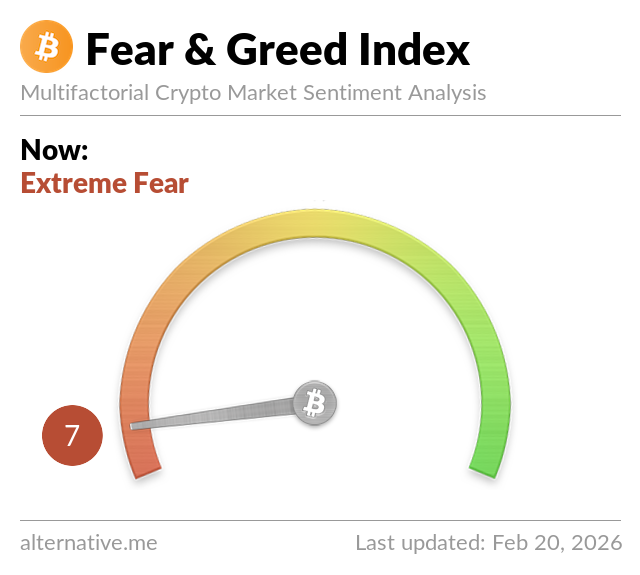
Sentiment still isn’t as low as it needs to be to call for the bottom;
-
and Bitcoin remains noncorrelated to any asset when there’s Bullish price action – Bitcoin continues to see absolutely no Bullish price action even when equities, bonds, and precious metals are rallying.
None of this is Bullish which sadly means prudent long-term investors and HODLers should expect further downside below $60K, build up dry powder, and make a buying plan for lower levels.
Bitcoin Trade Update
Premium subscribers to Get Irked get access to all the moves I’ve made in my Bitcoin trade over the past week as well as my next thirty (30) … yes, 30 … buys in Bitcoin including price levels, quantities, and a full layout of my ongoing long-term trade in the world’s biggest crypto.
Not Your Keys, Not Your Crypto…
In light of brokerage failures in 2022, I no longer keep any of my crypto on an exchange and I only keep enough USD on the exchanges I use to execute my next few buys. I use multiple cold wallets from the brands Ledger and Trezor to hold my crypto (click the links to access the direct sites, and I receive no affiliate benefits from these links).
Additionally, I have now divided my allocated USD between two different exchanges – Gemini and Coinbase – in case one (or both) becomes insolvent. Disclaimer: We both receive a bonus if you use my Gemini referral link to open an account.
I do not trust anyone in the space, even with Coinbase (COIN) being publicly traded (and one of my own Investments in Play positions).
No price target is unrealistic in the cryptocurrency space – Bullish or Bearish.
While traditional stock market investors and traders may think the price targets in the cryptocurrency space are outlandish due to the incredible spread (possible moves include drops of -90% or more and gains of +1000% or more), Bitcoin has demonstrated that, more than any speculative asset, its price is capable of doing anything.
Here are some of Bitcoin’s price movements over the past couple of years:
- In 2017, Bitcoin rose +2,707% from its January low of $734.64 to make an all-time high of $19,891.99 in December.
- Then, Bitcoin crashed nearly -85% from its high to a December 2018 low of $3128.89.
- In the first half of 2019, Bitcoin rallied +343% to $13,868.44.
- In December, Bitcoin crashed -54% to a low of $6430.00 in December 2019.
- In February 2020, Bitcoin rallied +64% to $10,522.51.
- In March , Bitcoin crashed nearly -63% to a low of $3858.00, mostly in 24 hours.
- Then, Bitcoin rallied +988% to a new all-time high of $41,986.37 in January 2021.
- Later in January 2021, Bitcoin dropped -32% to a low of $28,732.00.
- In February, Bitcoin rallied +103% to a new all-time high of $58,367.00.
- Later in February, Bitcoin dropped -26% to a low of $43,016.00.
- In April , Bitcoin rallied +51% to a new all-time high of $64,896.75.
- In June , Bitcoin crashed -56% to a low of $28,800.00.
- In November, Bitcoin rallied +140% to a new all-time high of $69,000.00.
- In November 2022, Bitcoin crashed -78% to a low of $15,460.00.
- In April 2023, Bitcoin rallied +101% to a high of $31,050.00.
- In June, Bitcoin dropped -20% to a low of $24,750.00
- In July, Bitcoin rallied +29% to a high of $31,862.21.
- In September, Bitcoin dropped -22% to a low of $24,900.00.
- In January 2024, Bitcoin rallied +97% to a high of $49,102.29.
- Later in January, Bitcoin dropped -22% to a low of $38,501.00.
- In March, Bitcoin rallied +92% to a new all-time high of $73,835.57.
- In August, Bitcoin dropped -33% to a low of $49,050.01.
- In January 2025, Bitcoin rallied +150% to a new all-time high of $109,358.01.
- In April, Bitcoin dropped -32% to a low of $74,420.69.
- In May, Bitcoin rallied +51% to a new all-time high of $112,000.00.
- In June, Bitcoin dropped -12% to a low of $98,247.01.
- In July, Bitcoin rallied +25% to a new all-time high of $123,231.07.
- In September, Bitcoin dropped -14% to a low of $107,250.00.
- In October, Bitcoin rallied +18% to a new all-time high of $126,296.00.
- In February 2026, Bitcoin dropped -53% to a low of $60,001.00.
Where will Bitcoin go from here? Truly, anything is possible…
What if Bitcoin’s headed to zero?
The only reason I speculate in the cryptocurrency space is I truly believe Bitcoin isn’t headed to zero. I am prepared for that possibility, however, by knowing I could potentially lose all of the capital I’ve allocated to this speculative investment. Professional advisers recommend speculating with no more than 5% of an investor’s overall assets. Personally, I’ve allocated less than that to speculating in crypto. I feel that anyone who doesn’t fully believe in the long-term viability of cryptocurrency would be better served not speculating in the space. On a good day, this asset class isn’t suitable for those with weak stomachs. On volatile days, the sector can induce nausea in the most iron-willed speculator. If a speculator isn’t confident in the space, the moves will cause mistakes to be made.DISCLAIMER: Anyone considering speculating in the crypto sector should only do so with funds they are prepared to lose completely. All interested individuals should consult a professional financial adviser to see if speculation is right for them. No Get Irked contributor is a financial professional of any kind.
Ways to give back to GetIrked:
Send me a tip via Stripe! Thank you!
Get free money by signing up for an account with my referral link for Schwab
Sign up for Gemini and we each get $10
Click this referral link to get the Brave Browser
If you use Brave, you can also use the Tip function to tip me in Basic Attention Token (BAT).
Suicide Hotline – You Are Not Alone
Studies show that economic recessions cause an increase in suicide, especially when combined with thoughts of loneliness and anxiety. If you or someone you know are having thoughts of suicide or self-harm, please contact the National Suicide Prevention Lifeline by visiting www.suicidepreventionlifeline.org or calling 1-800-273-TALK. The hotline is open 24 hours a day, 7 days a week.