
Summing Up The Week
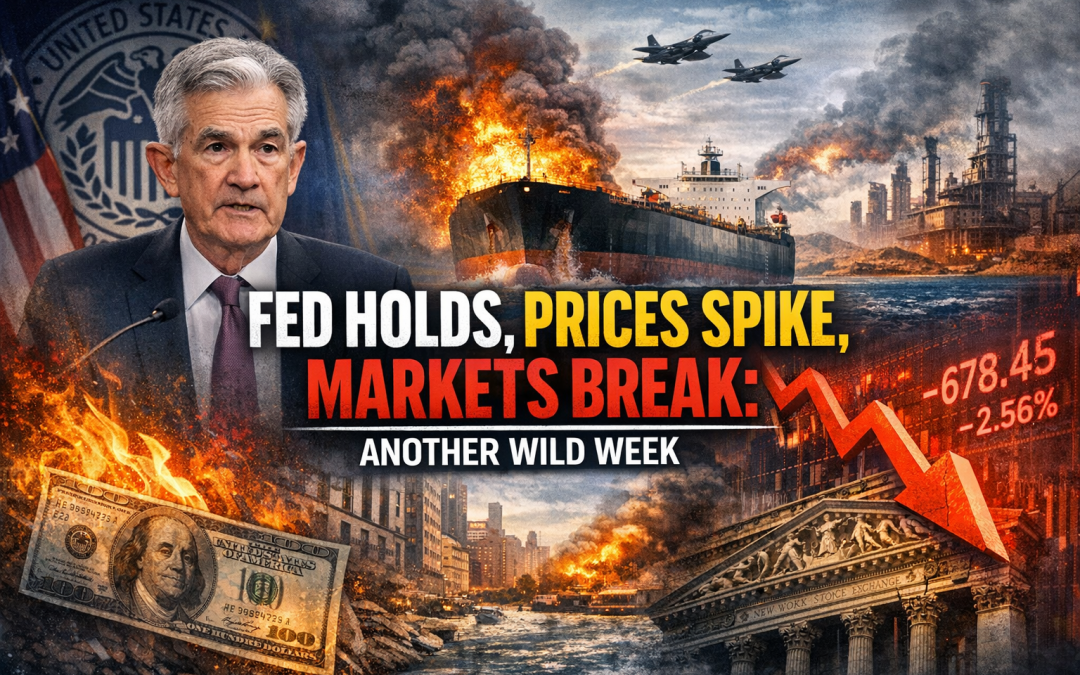
A volatile mix of geopolitical shifts and stubborn inflation kept investors on edge this week as markets struggled to find direction. Oil prices briefly eased after the U.S. allowed Iranian tankers safe passage through the Strait of Hormuz, offering a momentary lift to stocks before hotter‑than‑expected producer inflation reignited recession fears.
However, by mid‑week, the Federal Reserve held rates steady while warning that the Iran War’s economic fallout remains “uncertain,” which provided a one‑two punch that sent the major indexes sliding deeper into the red.
Let's take a deeper dive into the news that moved markets this week...
Market News
U.S. allows Iranian tankers through Strait of Hormuz
On Monday, the United States began allowing Iranian oil tanker ships through the Strait of Hormuz according to U.S. Treasury Secretary Scott Bessent, reported CNBC. "The Iranian ships have been getting out already, and we’ve let that happen to supply the rest of the world," Bessent told CNBC’s Brian Sullivan in Paris. "We think that there will be a natural opening that the Iranians are letting out, and for now we’re fine with that. We want the world to be well supplied."
While the U.S. and North America aren't reliant on oil from the Middle East, the rest of the world is. As a result, allowing Iranian tankers to transport oil through the strait resulted in a drop in the price of a barrel of oil back under $100 which caused stocks to recover modestly from last week's selloff.
Producer inflation rose 0.7%, significantly higher than expected
On Wednesday, the Producer Price Index (PPI) showed wholesale prices rose 0.7% in February against expectations for only 0.3% indicating inflation is growing once again, reported CNBC. The news came ahead of the Federal Reserve's interest rate meeting where expectations were already for them to keep the interest rate steady with no cuts, but the PPI only reaffirmed that expectation.
With the Iran War continuing with no end in sight, some analysts have started discussing the possibility of an incoming recession on the back of the significant wave of inflation which could be coming for the U.S. economy.
As one might expect, the stock indexes sold off ahead of the open on the back of the PPI since prices trickle down: when companies experience inflated prices to produce their products, naturally many of those companies will attempt to pass those prices on to their customers, causing an increase in consumer prices.
Fed holds rates steady, concerned with impacts of Iran War
On Wednesday, the Federal Reserve Committee surprised no one by holding rates steady while also citing "uncertain" impacts from the war in Iran, reported CNBC. However, despite the concerns, the dot-plots which show what each voting member intends to do still forecast at least one rate cut this year and another in 2027.
When asked about potential impacts of the Iran War, Fed Chair Jerome Powell said it was "too soon to know" but did point to short-term inflationary issues, at minimum, "Near term measures of inflation expectations have risen in recent weeks, likely reflecting the substantial rise in oil prices caused by the supply disruptions in the Middle East."
The markets were already weak following the higher-than-expected Producer Price Inflation from earlier on Wednesday, so the one-two punch sent stocks even lower with the S&P 500 and Nasdaq finishing the day down -1.36% and -1.45%, respectively.
Next Week's Gameplan
With the Iran War still raging, there won't be any drought to unexpected headlines next week, however the planned datapoints are relatively tame in comparison with last week. On Tuesday, we get the S&P flash services and manufacturing PMI, and, on Friday, we get the final consumer sentiment survey results for March.
That's it.
Well, outside of End-of-the-World Portfolio holding GameStop (GME) reporting earnings on Tuesday after the close, but if that's a market-moving event, we've all got much, much bigger issues to concern ourselves.
So, hang on to your hats because what moves markets next week is what we don't know, but I do know this: join me here back Friday so we can go over all the moves together, friends!
Check out Get Irked Premium on Substack!
After providing FREE content since 2018, the time constraints of producing Investments in Play, Speculation in Play, the Pandemic Portfolio, and Stock Shopping List have become too much to continue doing for free.
On Substack, you can subscribe for FREE to have the Week in Review and Crypto Corner, now separate newsletters, sent to your email inbox at no cost. The portfolio updates and Stock Shopping List are now part of a premium subscription plan.
I hope you will join me on Substack as I continue on this exciting journey!
THANK YOU FOR YOUR ONGOING SUPPORT!
Crytpo Corner
Click chart for enlarged version
Bitcoin Price (in USD)
%
Weekly Change
Bitcoin Price Action
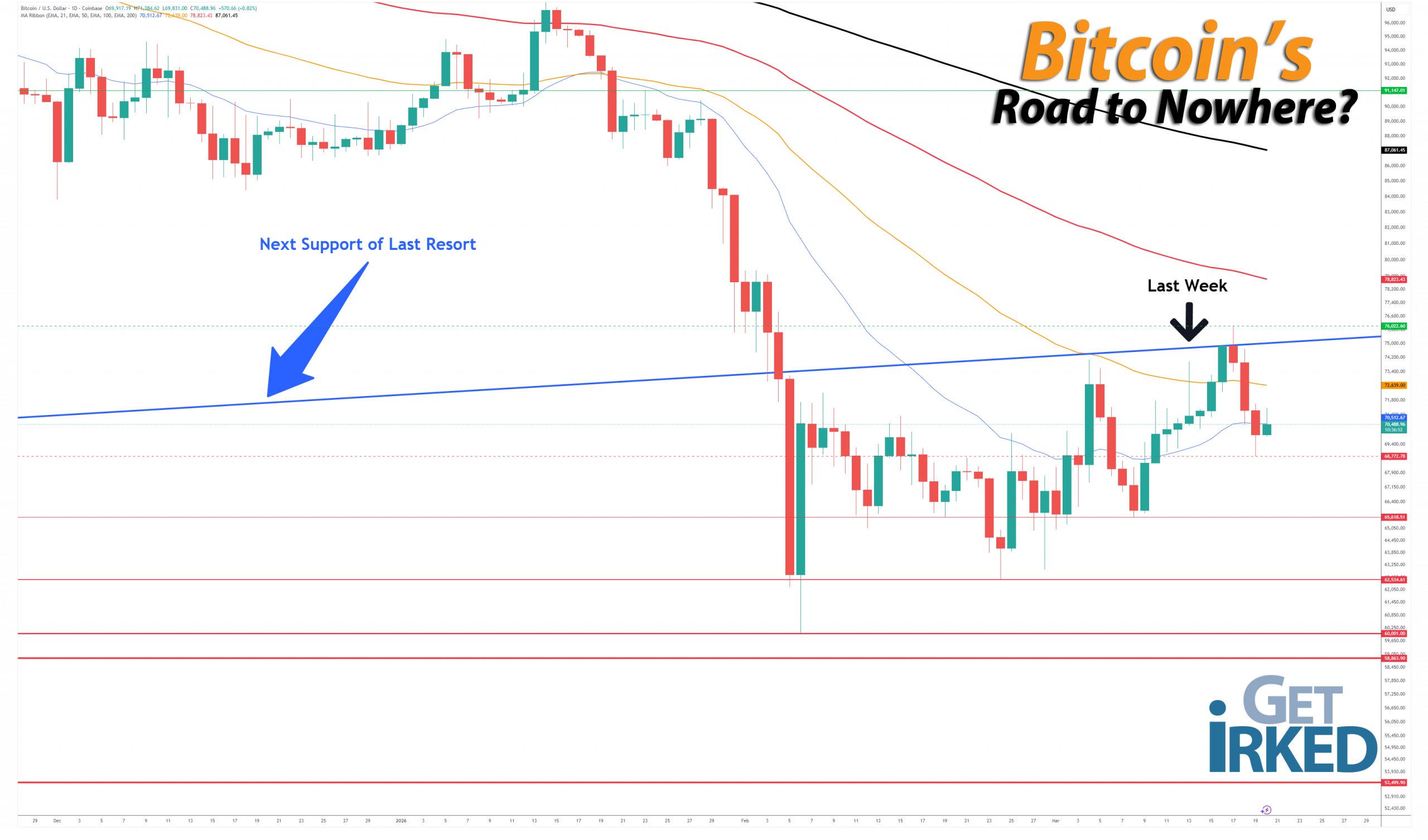
For much of the week, Bitcoin exhibited constructive price action as it produced a higher weekly-high on Tuesday, breaking through last week’s $73,968.00 before finding resistance right at $76,022.60, right at the Next Support of Last Resort trendline (in blue) which I’ve been using since January 2019.
However, the much higher-than-expected Producer Price Index (PPI) on Wednesday sent Bitcoin into reverse, and once again raised a question I’ve long asked:
What is it with Bitcoiners repeatedly calling Bitcoin an “inflation hedge?”
I’ve said it before but I’ll say it again here: Bitcoin is not an inflation hedge. Bitcoin is not a safe haven asset. Bitcoin is not “digital gold.” At least, not yet. Maybe one day Bitcoin will grow into this long-touted role, but for its entire history and its current present, the world’s largest cryptocurrency sells off with risk assets, the distinct opposite trajectory an asset considered an “inflation hedge” or “safe haven asset” should make.
All that being said, Bitcoin held up quite well and made a higher weekly-low at $68,772.78 on Thursday. The price action of higher-highs and higher-lows is distinctly constructive, although, once again, there is so much work left for the Bulls to do before the Bearish downtrend momentum and technical damage done to Bitcoin can be flipped Bullish.
The Bullish Case
Bulls were holding victory laps and claimed the price of Bitcoin would never see sub-$70K ever again when it briefly broke through $76K last week… exactly like what happened in 2018 when the price rallied above $7K before crashing to $3,130 and again in 2022 when the price rallied into the mid-$30Ks before crashing to under $16,000.
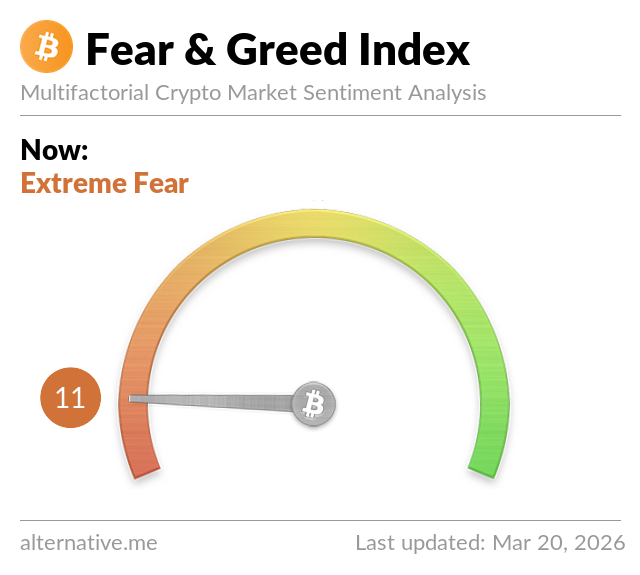
By Thursday, the Bulls had been shut up as the systemic marketwide selloff which the cryptocurrency sector had been seemingly ignoring for weeks no longer let crypto ignore, sending Bitcoin deep below $70K.
The Bearish Case
Bears had been surprisingly quiet and patient during Bitcoin’s stable reaction to the Iran War, perhaps because the Bears knew what I know: this is what Bitcoin does. Crypto Winters don’t end when all the Bulls are cheering for them to be over, Crypto Winters end in complete despair when even the Bulls have given up.
Unfortunately for anyone hoping for higher prices (including me), it looks like we’re far, far away from the end of this Crypto Winter.
Bitcoin Trade Update
Premium subscribers to Get Irked get access to all the moves I've made in my Bitcoin trade over the past week as well as my next thirty (30) ... yes, 30 ... buys in Bitcoin including price levels, quantities, and a full layout of my ongoing long-term trade in the world's biggest crypto.
Not Your Keys, Not Your Crypto...
In light of brokerage failures in 2022, I no longer keep any of my crypto on an exchange and I only keep enough USD on the exchanges I use to execute my next few buys. I use multiple cold wallets from the brands Ledger and Trezor to hold my crypto (click the links to access the direct sites, and I receive no affiliate benefits from these links).
Additionally, I have now divided my allocated USD between two different exchanges - Gemini and Coinbase - in case one (or both) becomes insolvent. Disclaimer: We both receive a bonus if you use my Gemini referral link to open an account.
I do not trust anyone in the space, even with Coinbase (COIN) being publicly traded (and one of my own Investments in Play positions).
No price target is unrealistic in the cryptocurrency space – Bullish or Bearish.
While traditional stock market investors and traders may think the price targets in the cryptocurrency space are outlandish due to the incredible spread (possible moves include drops of -90% or more and gains of +1000% or more), Bitcoin has demonstrated that, more than any speculative asset, its price is capable of doing anything.
Here are some of Bitcoin's price movements over the past couple of years:
- In 2017, Bitcoin rose +2,707% from its January low of $734.64 to make an all-time high of $19,891.99 in December.
- Then, Bitcoin crashed nearly -85% from its high to a December 2018 low of $3128.89.
- In the first half of 2019, Bitcoin rallied +343% to $13,868.44.
- In December, Bitcoin crashed -54% to a low of $6430.00 in December 2019.
- In February 2020, Bitcoin rallied +64% to $10,522.51.
- In March , Bitcoin crashed nearly -63% to a low of $3858.00, mostly in 24 hours.
- Then, Bitcoin rallied +988% to a new all-time high of $41,986.37 in January 2021.
- Later in January 2021, Bitcoin dropped -32% to a low of $28,732.00.
- In February, Bitcoin rallied +103% to a new all-time high of $58,367.00.
- Later in February, Bitcoin dropped -26% to a low of $43,016.00.
- In April , Bitcoin rallied +51% to a new all-time high of $64,896.75.
- In June , Bitcoin crashed -56% to a low of $28,800.00.
- In November, Bitcoin rallied +140% to a new all-time high of $69,000.00.
- In November 2022, Bitcoin crashed -78% to a low of $15,460.00.
- In April 2023, Bitcoin rallied +101% to a high of $31,050.00.
- In June, Bitcoin dropped -20% to a low of $24,750.00
- In July, Bitcoin rallied +29% to a high of $31,862.21.
- In September, Bitcoin dropped -22% to a low of $24,900.00.
- In January 2024, Bitcoin rallied +97% to a high of $49,102.29.
- Later in January, Bitcoin dropped -22% to a low of $38,501.00.
- In March, Bitcoin rallied +92% to a new all-time high of $73,835.57.
- In August, Bitcoin dropped -33% to a low of $49,050.01.
- In January 2025, Bitcoin rallied +150% to a new all-time high of $109,358.01.
- In April, Bitcoin dropped -32% to a low of $74,420.69.
- In May, Bitcoin rallied +51% to a new all-time high of $112,000.00.
- In June, Bitcoin dropped -12% to a low of $98,247.01.
- In July, Bitcoin rallied +25% to a new all-time high of $123,231.07.
- In September, Bitcoin dropped -14% to a low of $107,250.00.
- In October, Bitcoin rallied +18% to a new all-time high of $126,296.00.
- In February 2026, Bitcoin dropped -53% to a low of $60,001.00.
Where will Bitcoin go from here? Truly, anything is possible…
What if Bitcoin’s headed to zero?
The only reason I speculate in the cryptocurrency space is I truly believe Bitcoin isn’t headed to zero.
I am prepared for that possibility, however, by knowing I could potentially lose all of the capital I’ve allocated to this speculative investment. Professional advisers recommend speculating with no more than 5% of an investor’s overall assets. Personally, I’ve allocated less than that to speculating in crypto.
I feel that anyone who doesn’t fully believe in the long-term viability of cryptocurrency would be better served not speculating in the space.
On a good day, this asset class isn’t suitable for those with weak stomachs. On volatile days, the sector can induce nausea in the most iron-willed speculator. If a speculator isn’t confident in the space, the moves will cause mistakes to be made.
DISCLAIMER: Anyone considering speculating in the crypto sector should only do so with funds they are prepared to lose completely. All interested individuals should consult a professional financial adviser to see if speculation is right for them. No Get Irked contributor is a financial professional of any kind.
Suicide Hotline - You Are Not Alone
Studies show that economic recessions cause an increase in suicide, especially when combined with thoughts of loneliness and anxiety.
If you or someone you know are having thoughts of suicide or self-harm, please contact the National Suicide Prevention Lifeline by visiting www.suicidepreventionlifeline.org or calling 1-800-273-TALK.
The hotline is open 24 hours a day, 7 days a week.

You must be logged in to post a comment.